Except for words whispered at a low frequency, “I, Pet Goat II” hardly uses any verbal narration, etching many recent historical events into our minds in the most striking way through the language of symbols.
Written and directed by Louis Lefebvre (Heliofant), it is a Canadian animated short film. Released in 2012, the film captivated viewers with its allegorical and symbolic structure, placing itself at the center of various conspiracy theories and philosophical debates. Director Louis Lefebvre also worked on the film The Lord of the Rings: The Two Towers.
So, does this work, which highlights both subliminal symbols and the messianic figure throughout its narrative, serve as propaganda for religious or elitist authorities?
Here is the short animated film, named after “The Pet Goat” story read to students during George W. Bush’s elementary school visit on September 11, which you will analyze frame by frame.
My primary advice is for you to watch the film once in its natural flow before continuing down and changing your perspective with what I am about to share:
Watching this film in the shadow of the question I asked above, what kind of idea or feeling did it evoke in you without any explanation? Even though explicitly verbal narrative is not displayed, did it create a strong sense of conviction? You can write your ideas about the question in the comment section below.
Let’s begin!
The film, as script flow, consists of three stages in its simplest form:
- Broken Order
The script at this stage presents an open narrative to the viewer over political events developing in recent history, emphasizing the corruption and reckless destruction brought by the actors of the present old order.
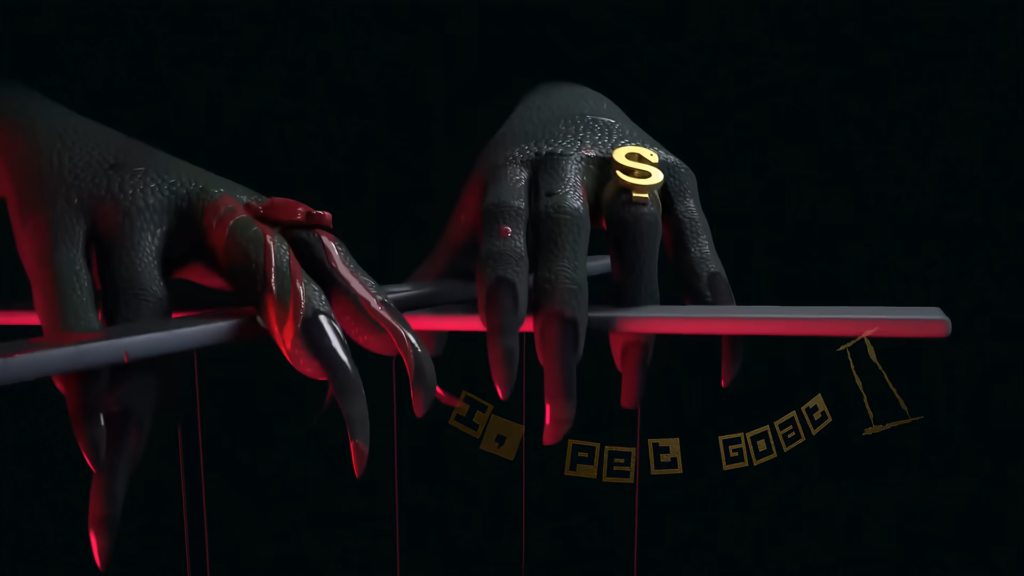
In the animation, which begins with a bloody-handed, demonic figure controlling puppet strings, as the camera pans down, we realize that the person at the end of the strings is George W. Bush, the American President of the era.
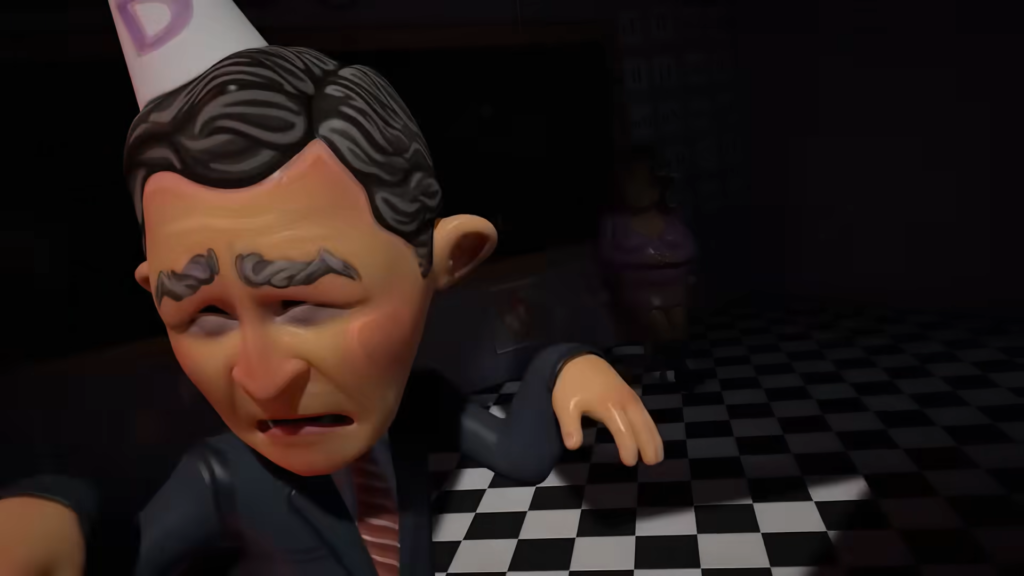
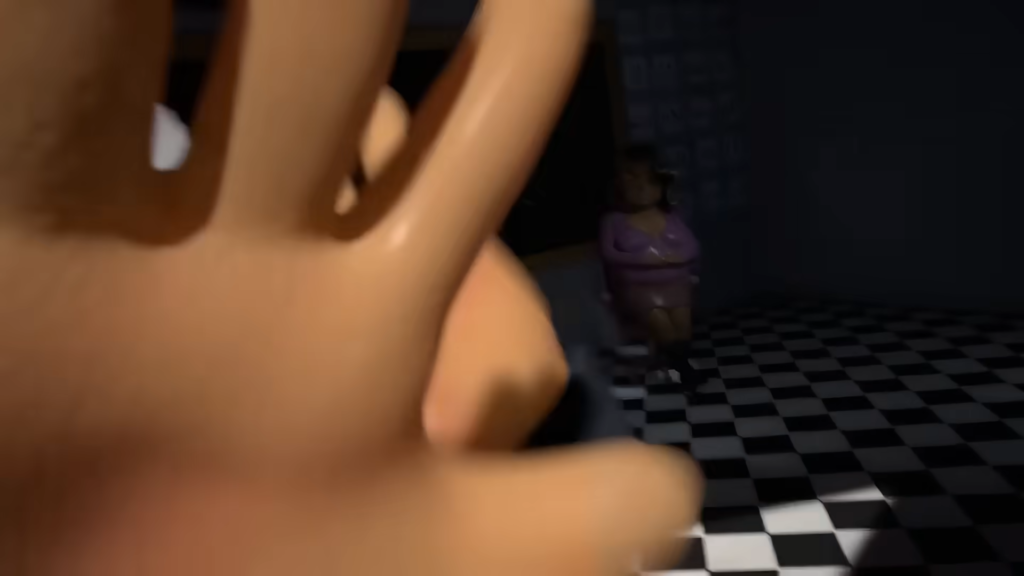
While the Bush figure is completely resigned at first, the moment he comes to his senses, he interferes with the camera (media) and, under the spotlight’s star, begins his distraction show on the checkered floor.
(The 25th frame technique is used here. Although this scene was intentionally designed to be noticed, it is a method in cinema that the human mind cannot easily perceive and is used to convey subliminal messages. The intended message is served at a speed of only 1 frame out of 25 frames passing in 1 second (1sec/25). )
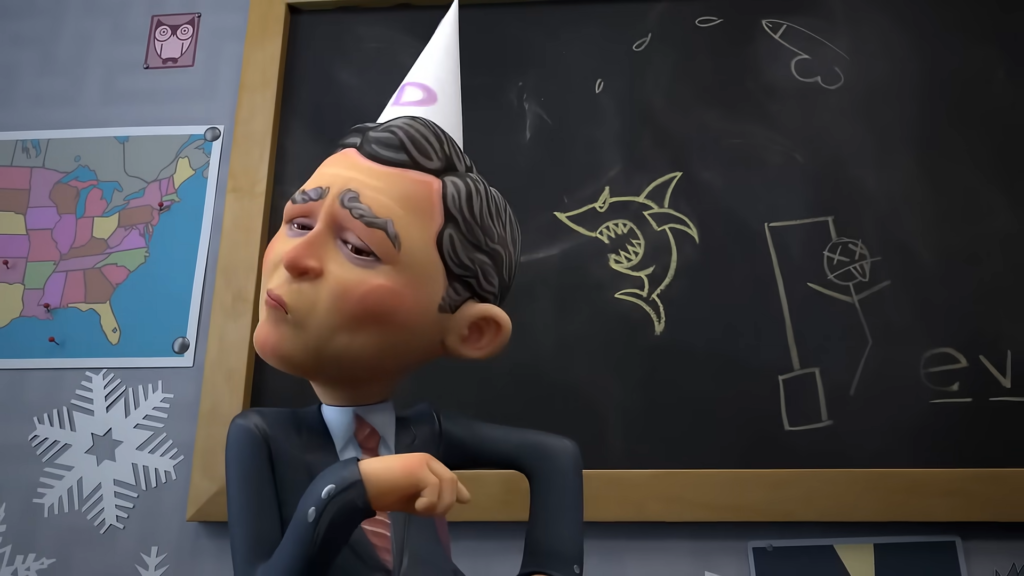
When the spotlights turn off and the scene reveals itself with general lighting, the Bush figure appears anxious yet striving to look confident in a classroom decorated with symbols in the background.
In the primary school classroom, the film begins to present the most striking examples of symbolism with icons meaning:
- a burning house (the dissolving family institution),
- a shark (the desire for power),
- a penis illustration (sexual abuse crimes committed especially against children),
- a hangman game containing words of unfinished evolution (the collapse of the education system),
- …
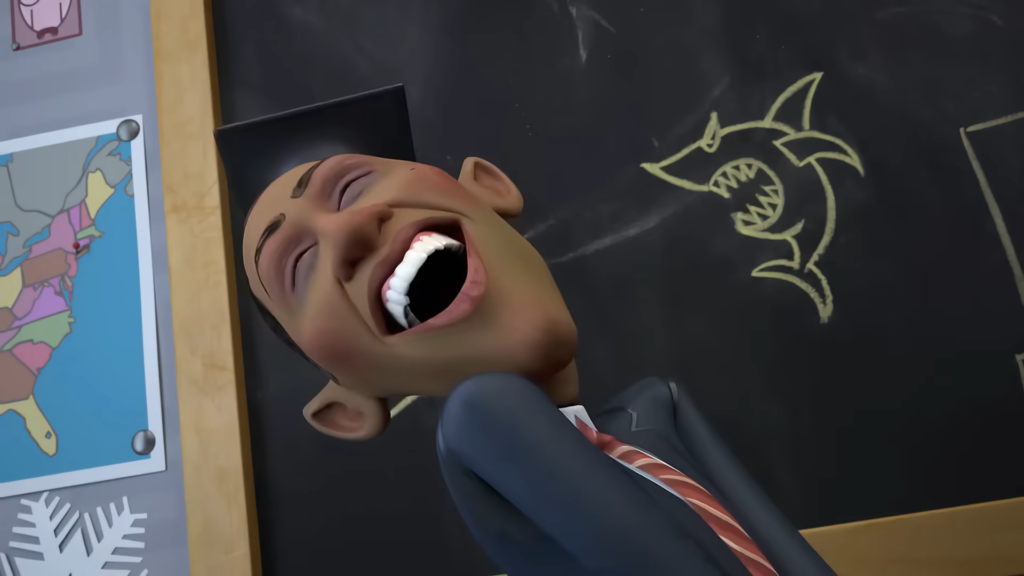
When the Bush figure becomes even more anxious and starts losing control of the situation, the president figure turns into Barack Obama in a single move. We observe a figure that is more sympathetic compared to George W. Bush, and emphasized as being more educated and intelligent with the graduation cap on his head.
However, as the camera angle zooms out and widens, a teleprompter with “LOL” written on it enters the scene. Here, we get the message that Barack Obama, just like George W. Bush, is sent as an actor whose role was assigned by other wills.
- Desire For Transformation
From this point on, a symbol that will frequently appear in the film enters the narrative:
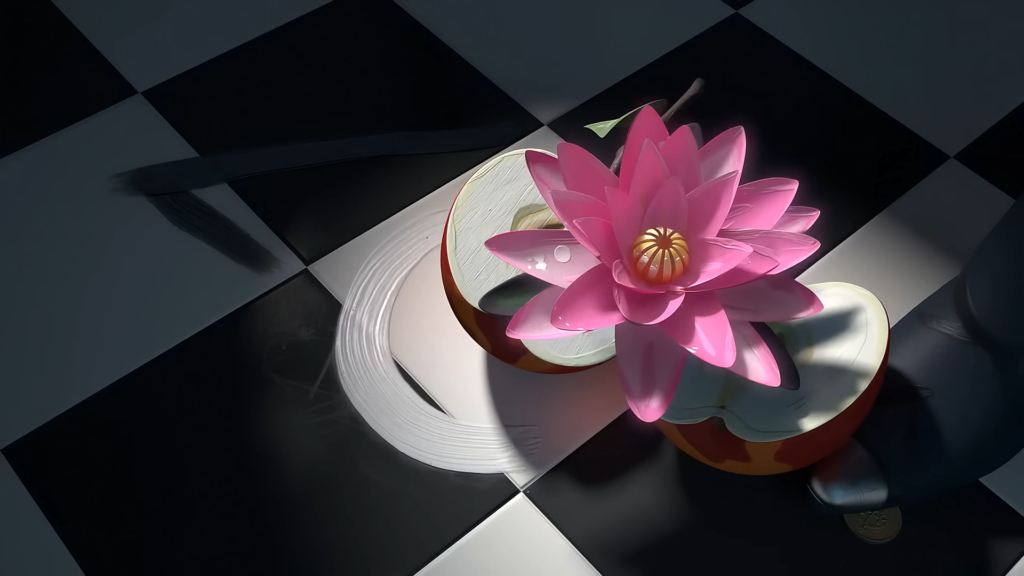
It represents rebirth, transformation, and spiritual enlightenment.
In this scene, we see a lotus flower blooming on the checkered floor from the seeds of the apple dropped from the character Lily’s hand. In the same scene, you can also notice a number written on the ground and the gold coin under Obama’s foot.
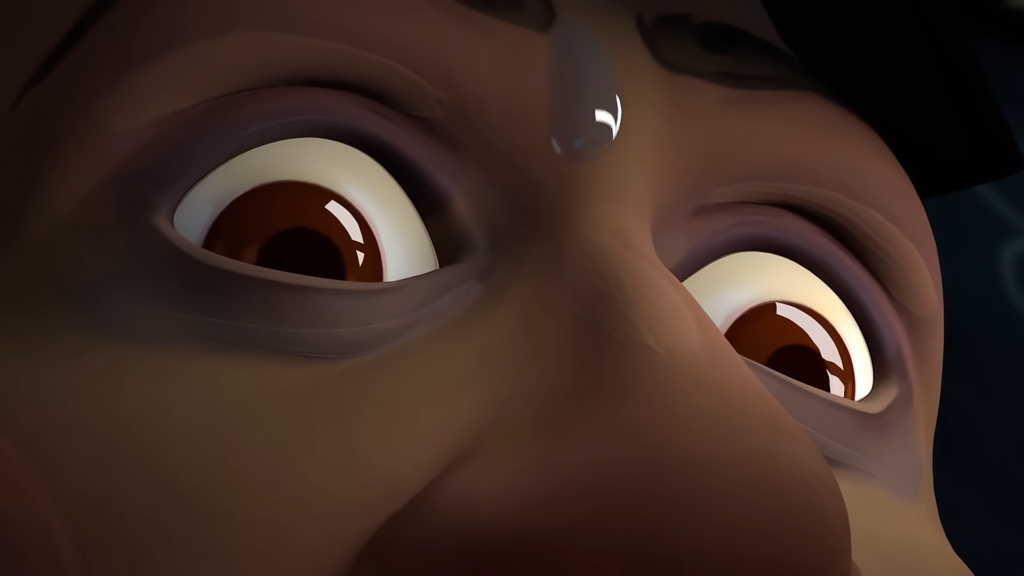
Here, an expression that could be expanded into pages of verbal narrative is delivered in a single frame. A single lotus flower blooming above all these symbols signals that change is approaching for the existing financial elites, and we read the anxiety this causes right off Barack Obama’s close-up facial expression.
As the camera moves out of the school window to a wider angle, we watch a graffiti of Psalm 23 from the Torah on the wall, a torn American flag, and a structure representing the Twin Towers being intentionally detonated with dynamite after an attack.
From this point on, the film begins to present a rapid series of all the disasters that have occurred and are occurring in the world.
- Awakening
While displaying the catastrophes of the order that has entered the collapse stage, the figures no longer act as submissively as before.
The pro-peace Asian woman named Sun Sue, who I estimate takes her name from Sun Tzu, the author of The Art of War, throws herself in front of a brutal army and waves her white flag.
Right here, there is an interesting detail that has only recently gained meaning for me as well. The balance of the soul symbol reflected on the ground breaks. Afterwards, the death figure touching the character tells her that submission will not prevent her death.
The detail that newly caught my attention is right here: the small island-like spots on the face of the Asian girl who falls into despair.
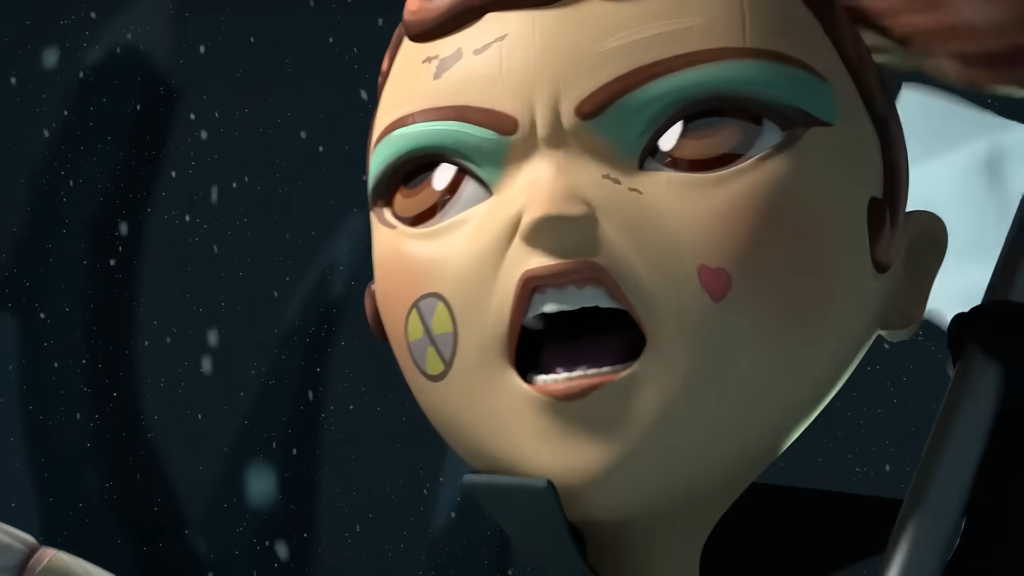
Meanwhile, the messiah figure defined by the director as “The Keeper” has already begun his journey in the boat of Anubis, known as the god of death in Egyptian mythology. It is said that Anubis guides and accompanies the souls of the deceased on their arduous underground journey to reach a higher state.
Having arrived at this part of the narrative, let us return to the question I asked at the beginning.
Does this animation emphasize that the path to salvation goes through a single religion by keeping the Christ figure in the foreground?
Because the animation contains a wide variety of religious verses and mythological narratives within itself, it is difficult to state this with an absolute conclusion. However, when we evaluate the director’s cultural background, presenting this with the support of other religious beliefs as the main character seems like a very natural form of expression.
The ascension of the character Aali into the sky with a celestial ceremony from inside the bombed mosque, and the destruction of the church structure in the background in the final scene where the Christ figure reaches the Sun, show that religion sheds its institutionalized materialist structure and becomes a door opening to enlightenment in its purest form.
Finally, I would like to share with you this quote from the director’s interview, which is the source of the variety of meanings in the analyses:
“In an interview with Webneel, Lefebvre expressed his effort during the creation process to create images that came to his mind even if he did not fully comprehend their meanings, with the following words:
‘I’ve always had an interest in spiritual traditions and philosophies. It was as if I felt I would reach a sort of resolution in this journey of exploring my inner world using all these universal symbols. I believed this would lead me to a deeper peace.
Throughout the process, I tried not to let my mind interfere with this experience. Instead of censoring images I couldn’t fully understand at a conscious level, I chose to let them flow through me; even if some images surprised me a bit.
I followed the story in its visual form. When something felt right visually and in terms of rhythm, I pursued it.
While working on this piece, over time I found various explanations for many of the small stories within it. Furthermore, many people offered me completely different interpretations. I think that is the most beautiful part; because the work can evoke different associations and meanings in every person.’
— Wikipedia
The production contains much more detailed and deep narratives than the general information I mentioned here. My aim, as someone without sufficient mastery of symbolic language grammar, was to offer a rough awareness regarding the visual storytelling style here rather than a full analysis of the animation.
Although I consider many analyses on the internet as forced efforts aimed at keeping conspiracy theory enthusiasts occupied, you can browse through the reviews about the subject on the animation studio’s website and the YouTube videos prepared for this.
Awards Won by the Animation
- Ocelot Robot Film Festival 2012 – Best Short Film
- Fubiz – Best of 2012 (Ranked 14th out of 100)
- Future of Animation – Short of the Week Award
- International Short Animation Film Festival “Ciné Court Animé” (Roanne) – Best 3D Film Creation Award
- Bitfilm Festival – 3D Film Award Toronto Animated Arts Festival International
- Granada Short Film Festival – International Competition
- Short Shorts Film Festival & Asia 2013
Source: Wikipedia
Thank you for valuing this content I prepared for you and reading it up to this point. Wishing to meet again in the next post.
Semih Akgül